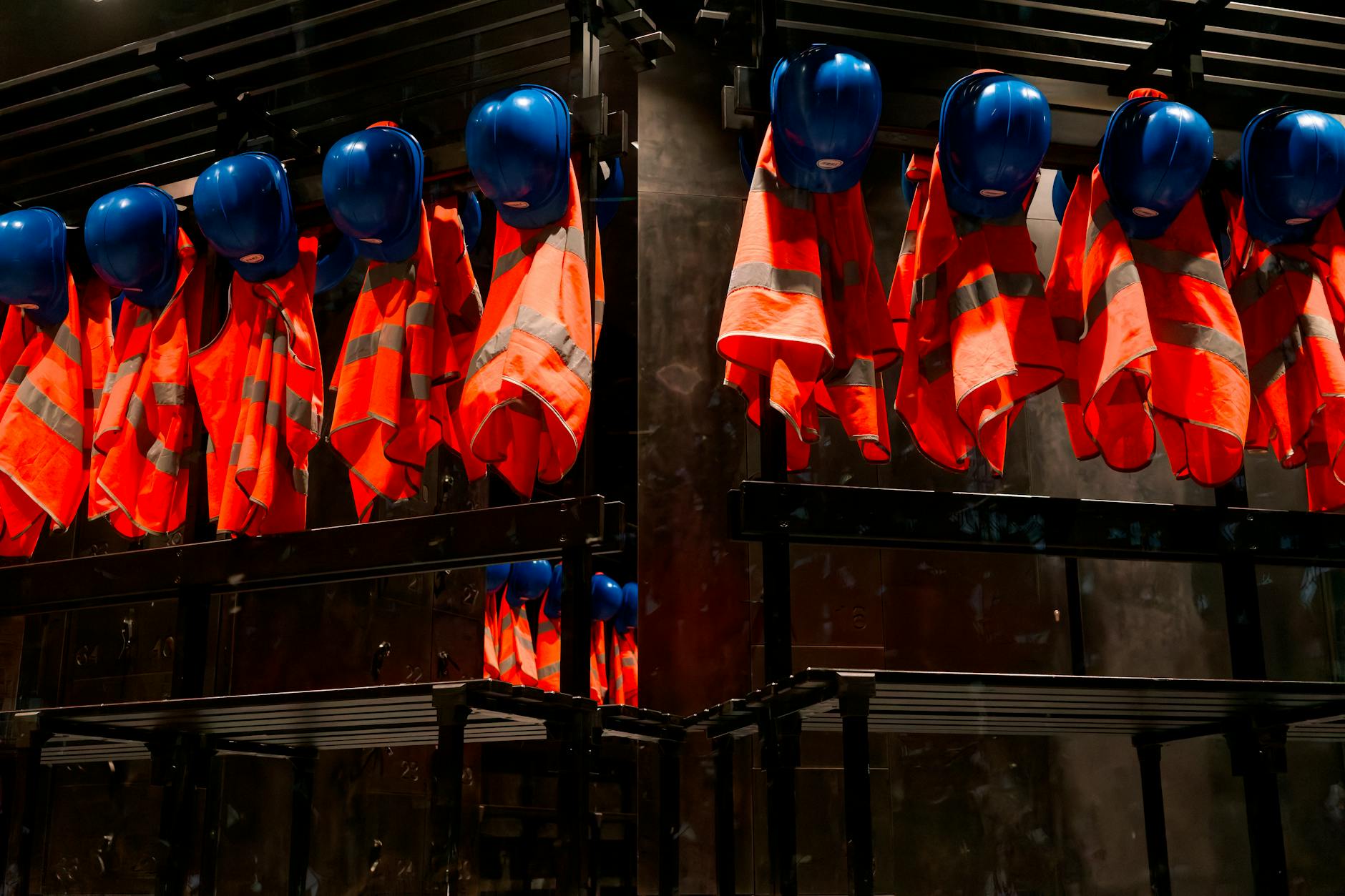
Avoid Wasting Time on Uniform Rental Invoice Conflicts and Missing Garments
If you find yourself spending countless hours each month searching for missing uniforms, challenging unexpected charges, and investigating rental invoices, you’re not the only one. Uniform rental reconciliation has turned into one of the most significant administrative challenges for businesses in Arizona, with many companies dedicating an average of 8-12 hours each month just to handle rental paperwork.
The standard cycle for uniform rental billing creates a perfect storm for reconciliation issues. You receive weekly invoices filled with confusing codes, sudden price adjustments, and charges for items you believe you returned weeks prior. This endless back-and-forth relationship drains productivity and distracts your team from focusing on their core tasks.
Why Are Uniform Rental Invoice Disputes So Challenging?
Unlike straightforward purchases, rental billing includes numerous moving components that complicate tracking. Each piece of clothing is assigned a specific ID, monitored through various stages (active, repair, replacement), and billed using intricate formulas that can change without prior notice.
Take, for example, Phoenix Manufacturing’s experience from last year. Their accounting department unearthed $3,400 in overcharges over a span of just three months of invoices. Why? Their rental provider had billed them for 22 “lost” uniforms that were, in reality, in the vendor’s repair queue. Without detailed reconciliation records, they almost absorbed that entire expense.
The complexity increases when factoring in employee turnover. Newly hired staff need uniforms right away, yet uniforms belonging to departed employees often linger on your invoices for weeks or even months. Arizona Uniform’s direct purchase programs take away this tracking hassle by granting you full ownership from the very beginning.
The 5 Major Pain Points of Reconciliation
1. Endless Charges for Missing Items
Rental firms usually charge 10-15 times the actual cost of garments for items deemed “lost.” For instance, a $25 shirt can suddenly turn into a $375 expense. To make matters worse, these charges frequently surface months after the supposed loss occurred, complicating the dispute process.
The onus of proof lies squarely on you. In the absence of photographic evidence or signed return receipts (which most rental companies conveniently fail to provide), you may end up paying for items that could very well be in their warehouse right now.
2. Unexplained Fluctuations in Weekly Invoices
While your base rental rate might remain steady, additional fees can vary dramatically. Environmental fees might spike by 40% in a single week. Processing fees come and go unpredictably. Fuel surcharges can double without any explanation. These practices may very well violate FTC guidelines on transparent pricing regarding deceptive billing.
To monitor these fluctuations, you must scrutinize invoices line by line each week. Miss even a single inconsistency, and it might become your new “normal” rate indefinitely.
3. The Dilemma of Repair Versus Replacement
When uniforms inevitably wear out (which is common in industrial environments), rental companies have the final say on whether to repair or replace. Replacements initiate new rental agreements at current rates, which are often 15-25% higher than what you initially agreed to.
You seldom receive advance notice about these choices. Your first indication might come as a sudden increase in the next week’s invoice, with vague mentions of “garment refresh charges.”
4. Compounding Assignment Errors
Sarah from shipping left the company three months ago, yet her uniforms are still listed on invoices. At the same time, new hire Mike has been using borrowed uniforms for six weeks due to a lost rental assignment.
These assignment errors lead to a domino effect of issues. You’re footing the bill for uniforms that nobody is using while racing to ensure actual employees are properly outfitted. Arizona Uniform’s team assists businesses in transitioning to ownership models that restore control over their inventory.
5. Automatic Renewal Traps in Contracts
The majority of rental agreements come with automatic renewal clauses and require cancellation notifications anywhere from 90 to 180 days in advance. Miss that tight window, and you’re stuck with the vendor’s terms for another 3-5 years.
These contracts frequently have annual price increases ranging from 3-8% that can accumulate rapidly. By the third year, you could be paying 20% more for the same service with little to no opportunity for negotiation.
How Can You Completely Remove Uniform Rental Hassles?
The most effective method to eliminate issues with rental reconciliation is to stop renting altogether. Direct ownership models strip away the complexities of billing. You purchase uniforms once, manage them on-site, and avoid surprise charges for good.
Consider the case of Mesa Manufacturing. They switched from rental to ownership in January 2025, investing $18,000 in top-quality uniforms for 75 employees. Their prior rental expenses totaled $4,200 per month. Within just five months, they broke even and are now saving $50,400 annually, while completely avoiding reconciliation issues.
The benefits of ownership accumulate over time. You no longer have to review invoices weekly. There are no penalties for missing items. No more unforeseen price hikes. Your accounting team can reclaim those 8-12 hours monthly that would have been spent reconciling for more productive tasks.
Can Small Businesses Afford to Shift from Rental?
While the initial investment may seem steep, the financial logic works quite favorably for companies with 20 or more employees. Most organizations typically see a return on their investment within 4-8 months, depending on their current rental expenses.
You might want to make the transition in stages. Start by equipping new hires with owned uniforms while allowing rental agreements to expire naturally. This approach spreads costs over 6-12 months and helps avoid early termination fees.
Arizona Uniform’s expanding team specializes in assisting businesses with calculating precise transition costs and timelines. Many clients realize they are currently spending enough on rentals to buy high-quality uniforms twice each year.
Common Questions and Answers
What does uniform rental reconciliation entail?
Uniform rental reconciliation is the procedure of examining rental invoices, tracking lost items, validating charges, and contesting billing inaccuracies with uniform rental providers. For most businesses, it typically takes 8-12 hours each month.
What do uniform rental billing errors usually cost?
The typical business loses between $200-500 each month due to unnoticed billing discrepancies. Larger businesses often find overcharges exceeding $10,000 annually during comprehensive audits.
Is it possible to negotiate better terms for rental reconciliation?
Most rental contracts offer limited flexibility once they’ve been signed. Critical factors like loss charges and price increases rarely change unless you threaten to cancel – and only if you are outside the lock-in timeframe.
What records are essential for rental disputes?
Keep a record of every uniform exchange with photos, maintain copies of weekly invoices, track changes in employee assignments, and document damaged items with pictures before returning them. Lacking this evidence, disputes can devolve into a mere matter of your word against theirs.
How long does it take to switch from rental to purchasing garments?
The physical transition typically requires 2-4 weeks. Additionally, anticipate another 30-60 days to properly terminate rental agreements, depending on your contract terms. Starting the process 90 days ahead of renewal deadlines can help you avoid automatic extensions.
Optimizing the Finances for Your Operations
Smart businesses know to crunch the numbers beforehand. Collect your last 12 months of rental invoices. Tally up base fees, additional charges, and disputed amounts. Don’t forget to include the cost of the labor spent on reconciliation time. As per Bureau of Labor Statistics wage data, that administrative time costs between $35-50 per hour.
Now compare that total with direct purchase costs. Quality industrial uniforms range from $35-65 each. With proper maintenance, these can last 18-24 months in heavy-duty scenarios, or even longer in office environments.
The disparity often surprises business owners. One retailer in Phoenix discovered that their annual rental expenditure of $72,000 could have funded their entire uniform needs three times over. They decided to make the switch and reinvested the savings into employee benefits.
Taking Steps to Address Uniform Rental Billing Issues
Don’t wait for yet another frustrating reconciliation cycle to unfold. Begin by asking your current provider for a detailed billing audit. Document each discrepancy, no matter how minor. Gather your evidence with solid data before making any changes.
Next, evaluate your actual total rental costs, encompassing administrative time, dispute resolutions, and unexpected fees. Compare this with the benefits of ownership. Don’t forget to include laundry costs if you plan to manage cleaning yourself.
The road away from uniform rental reconciliation headaches starts with understanding your options. Direct ownership removes billing conflicts, eliminates invoice surprises, and restores control where it rightfully belongs – with you. Ready to put an end to the rental invoice chaos? Check out Arizona Uniform’s ownership programs and learn how businesses in Phoenix save thousands while gaining complete control over their inventory.